

‘The Rip’ and Sturdy Plotting
It ain’t showy, but successful stories don’t have to be.
NEW STANDARD DISCLAIMER: This newsletter aggressively spoils things.
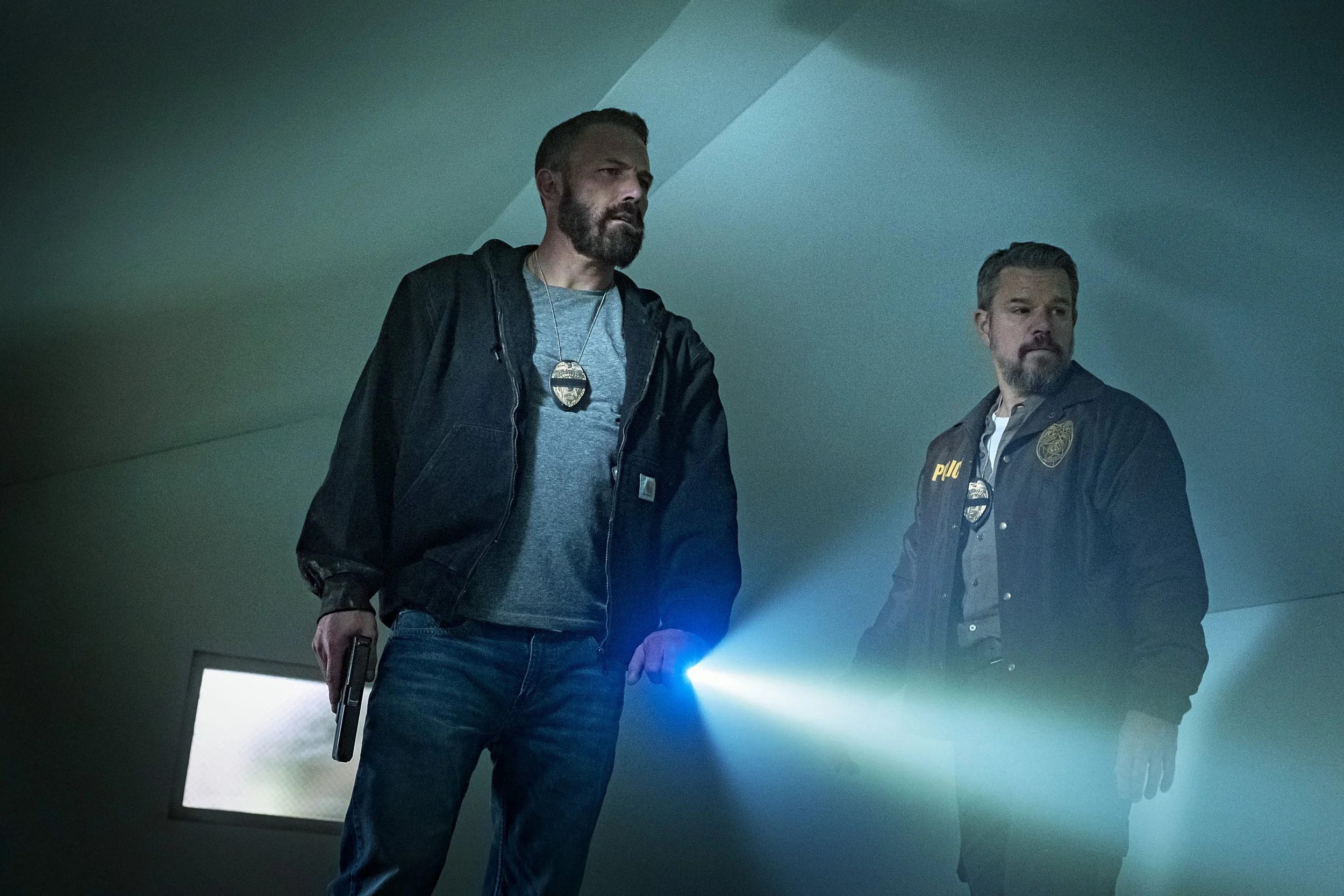
I would swear there was a time when a new movie starring Matt Damon and Ben Affleck would have been a Big Deal1, but here we are in the year 2026 and The Rip is just part of the undulating mass of content hosted by Netflix2. There’s a brief flare of publicity, it shows up on the platform’s Top Ten list for a week, and then it sinks down, down into the mulch, surfacing every now and then when you fondle the remote a little too much3.
Not that The Rip deserves much more than that; it’s a fine copshop story directed and co-written by Joe Carnahan, but fine is a modest compliment. The story concerns a police task force in Miami that specializes in “ripping” drugs and cash from major dealers that finds itself dealing with internal treachery and corruption when a load of money is ripe for the taking. It’s not stupid or brilliant4, and back in the 1990s it would have enjoyed a steady run at the box office and then a splashy debut on cable without winning a single award along the way.
You might not find a lot of clips from The Rip on Youtube “amazing scene” playlists, but if you spin this one up on some random Thursday when you want to be entertained for a few hours, the mission will be accomplished. Stories don’t have to be brilliant to be worth talking about5. The Rip is remarkable in 2026 because of its steady, deep competence, in fact. It’s the sort of story that a good writer dashes off without breaking a sweat, using sturdy plot devices and the sort of misdirection that isn’t showy, but is effective.
Five Cops Just Magically Appeared at My Doorstep. I’ve Been Better

The story here is straightforward: Lieutenant Dane Dumars (Damon) gets a tip that there’s a large amount of money at a stash house. He’s not sure if he can trust his team, because there’s evidence that someone is on the take, and one of his officers was assassinated in the film’s prologue6. So, he gives out a different amount of money to each member separately—one thinks they’ll be seizing $100,000, another thinks it will be $175,000, etc., as a ruse to ferret out the rat. When they arrive, however, they find $20 million, and Dumars makes out that he might be tempted to steal it himself7.
This, of course, is just a feint to expose the real snake in their midst. That’s essentially the entire plot, and it works well because of its lean nature and simplicity, but also because Carnahan uses some simple narrative tricks to keep things interesting. Most importantly, he separates the two lead characters (Damon and Affleck, playing his second-in-command, Detective Sergeant J.D. Byrne) for a lengthy period of time. When Byrne comes back to the scene there’s mutual distrust because neither man can be certain what the other has been up to8.
Of course, this is part of the plan to coax the dirty cop(s) out into the open, but the audience doesn’t know that until later. Separating major characters like that is a simple trick, but it almost always works because it destabilizes things. When your characters all know exactly the same information, it’s difficult to generate tension between them based on that information—but separate them for a while, and it’s easy to introduce a little spice of distrust. After all, with $20 million floating around, isn’t it strange that Detective Sergeant Byrne was gone for so long? And won’t he be suspicious whens someone tells him about Dumars’ sketchy comments about the money? It’s just basic writing, but it’s also remarkable how infrequently people use these basic tools.
When’s the Last Time You Guys Caught a Cop Killer in a Conference Room? I’m Curious
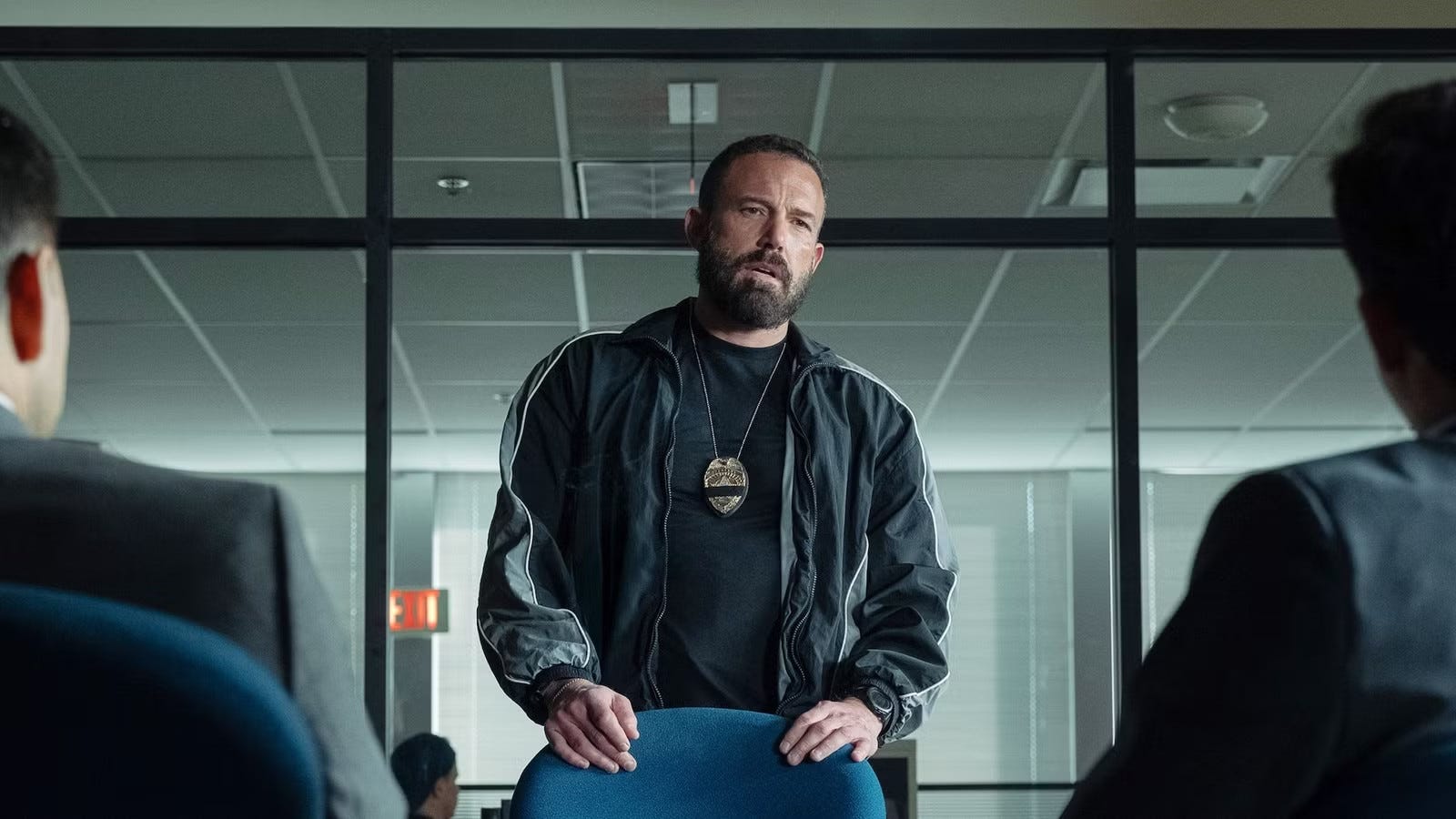
Another sturdy little bit of writing here is how one of the twists is camouflaged. Early in the film, while Dumars and his team are relaxing, we meet Mateo “Matty” Nix (Kyle Chandler), a DEA agent. They have some mild banter, and later, when things begin to go south, Byrne calls Nix and asks for help. Of course, Nix turns out to be one of the bad guys, but this twist doesn’t feel like a cheat because Nix’s character is balanced well. He’s shown to the audience as an obvious resource who could plausibly save the day, so when he’s called on to do just that it’s accepted9. When it’s revealed that he’s actually there to make the day much, much worse, it’s not exactly a seismic shock, but it is a well-handled one.
And that’s it, that’s all there is to this movie. The film is competent, through and through, from the directing to the sound design to the performances, and that stems from the sturdy script that simply tells an entertaining story well. There’s no chopped-and-screwed timeline, no mind-blowing reveal, no skirting-the-edges-of-plausibility twist. It’s just a good story10.
That doesn’t mean it’s perfect. No one needed one more self-indulgent scene where Ben Affleck leans into his Bostonian Gremlin11 persona to smart off at a bunch of assholes in suits, for example, and yet, there it is, laughing at us. And as all stories based on elaborate deceptions do, it relies a bit too much on convenient coincidence—people being in the right place to overhear things, and making the necessary incorrect assumptions about what they hear12.
But those are pretty minor kvetches. Overall, The Rip is just an example of how far competence can take you in creating a successful story. Of course, if you’re suspicious of my qualifications to discuss anything in the realm of “competence” I completely understand; I’m writing this from my phone because I’ve once again locked myself in a public toilet and can’t get out.
NEXT WEEK: The Life of Chuck and the power of structure.
If you enjoy this newsletter, consider subscribing to my paid fiction Substack, Writing Without Rules: From the Notebook!
Then again, I think I should be a big deal, so maybe my Big Deal Calibration is … off.
I can’t be the only person who fires up Netflix (or any streaming platform, honestly), sees the ocean of slop, and just feels too tired to watch anything.
I often sit on the couch after The Duchess has gone to bed and watch a little TV and do some writing, and cats sit on me, and always—always—sit on the TV remote and then hiss and scratch me when I retrieve it.
I feel like Not Stupid or Brilliant could be the title of my memoir.
Some might say my entire career is predicated on this belief.
I often think about this scene from The Wire and figure that must be impossible to resist.
I love inflation in crime movies. Used to be $1 million was enough to motivate murder. The way things are going our criminals and bent cops will be chasing $1 billion by 2030 or so.
I also imagine separating Affleck and Damon is often necessary because the longer they’re in the same room the broader and more ludicrous their Boston accents become.
Plus, Kyle Chandler just radiates cheerful competence, even when he’s playing a bad person. This man could show up at my door reeking of booze and ask me for $500 in order to do good deeds and I’d probably give it to him.
Nothing has done more harm to the art of storytelling than chasing mind-blowing twists. Some stories don’t have twists, kids. That’s a fact.
Yes, I have trademarked “Bostonian Gremlin” and you will soon be able to buy the merch. You’re welcome.
Some people have never watched an episode of Three’s Company and it shows.
Agreed on all points. I think the biggest compliment I can pay the film (beyond the points you've already made) is that I watched it in one sitting. It held my attention all the way through, which doesn't seem like much, but it's something a lot of movies don't do these days.